Do you ever think back to who you were a year ago, and wonder: Who the hell was she? It’s almost comical how change finds you — weaving in and out the mundane — and lands before you, raw and ready.
A year ago… Well, I was one large, gaping wound. But the focus of this piece is about reshaping a perceived shortcoming through healing and perspective shifts. That starts with one of the most dreaded concepts: external validation.
There was always a part of me that was keenly focused on external validation, particularly in how men saw me, or didn’t see me. This isn’t uncommon in women: we are taught from a young age to chase male attention. Not receiving it, we are told, is indicative of low self worth and importance, of something missing. Instagram and a validation-seeking online world doesn’t help.
As it so happened, men not seeing me romantically was a reoccurring issue that haunted me from middle school, to undergrad, and into the final leg of my twenties. Men just didn’t see me. But they always saw my friends. In their eyes, men found something that was missing in themselves. Something they wanted. Something beautiful, and gentle, and maybe a little wild.
But life? It hadn’t afforded me beautiful and gentle. There was a wildness to me — always — but never a gentleness. Life had sharpened me against stone from a young age, and I was still being molded, one long, painful loss and responsibility at a time. Softness and ease didn’t live in my eyes the way it did my friends’, but that didn’t mean I didn’t want it to. I tried to offset the intensity with my smile — a bright, telling thing — but it typically shined its brightest when I talked about my career and ambitions. And when I talked about that? Men turned away fast, like I burned them. As though the many hats I wore were something to be ashamed of. I could never make myself feel shame for my ambition, though. Could never shrink that part of myself. So, I accepted it. But I refused to accept the other reality: that men overlooked me so easily because I was too hardened to be beautiful in their eyes.
Until that night at The Million Dollar Cowboy Bar in Jackson Hole, Wyoming.
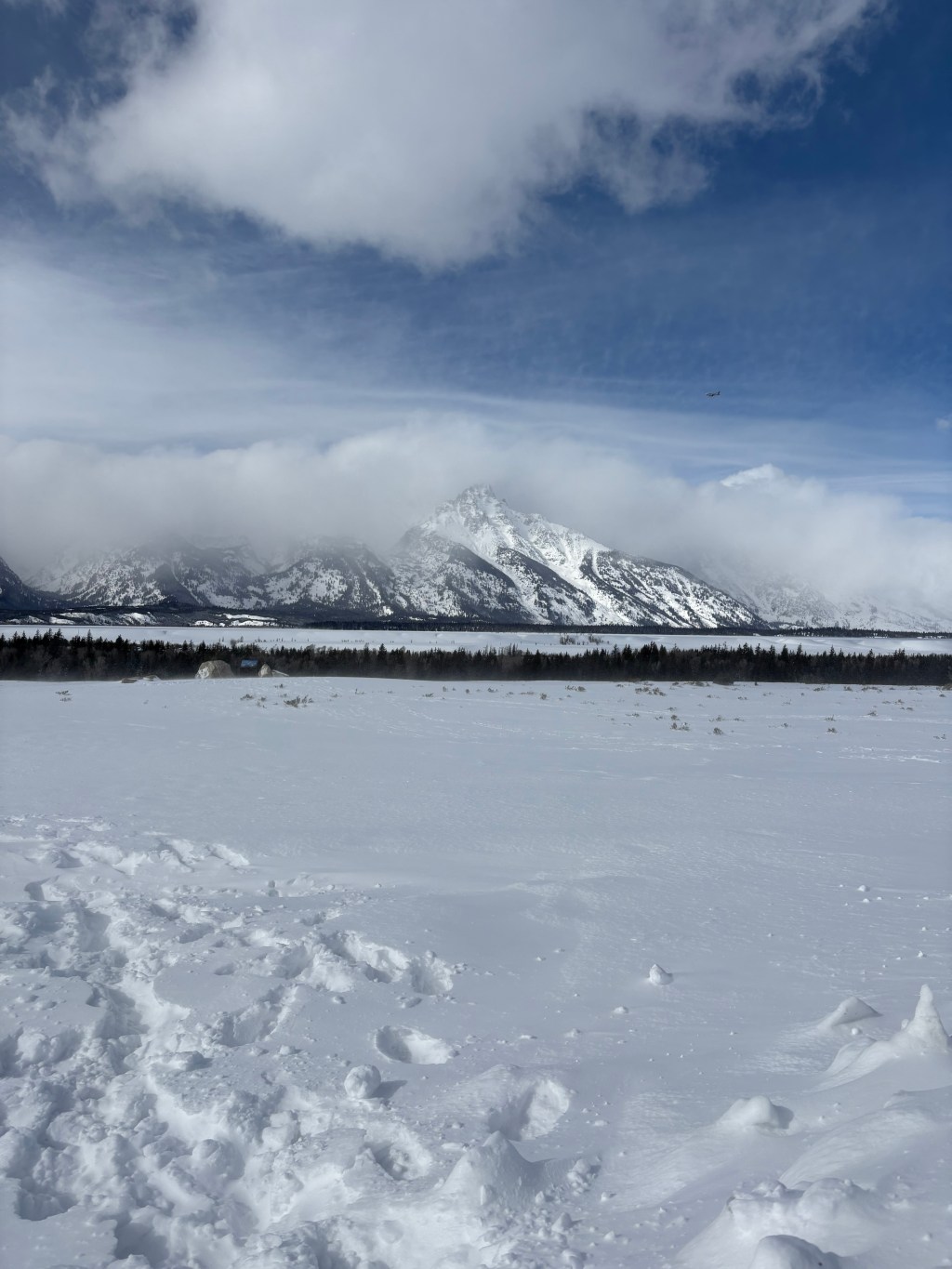
I had done fair job of keeping myself together that trip. It’s tough to discover your father passed at the outset of your vacation. Tears found me in the evenings — long after my friend tucked herself into bed — and I journaled. Snow covered the pointed peaks of the Tetons and insulated the more jagged pangs of mourning.
On the last leg of our trip, my friend and I went into the famous Million Dollar Cowboy Bar. Country music twanged through the speakers and the air vibrated with the unique diversity offered in skiing towns. Rich, old, young, thrill-seekers, locals — everyone was represented. My friend and I had a few turns around the dance floor and some drinks before a final shuffle to the restroom. We both went in; but my friend adjourned first. When I rejoined her, there was a man at her side. Tall. Blonde. Clever. I could certainly see the appeal, and my friend did, too, even as she cast an awkward look in my direction. I lingered at the outskirts, used to this: it was not the first round of attention she’d received that night, and likely not the last.
At some point, I was brought into the conversation. The man was polite, kind even. But I was tired. Grief was a heavy cloak at my shoulders, and my ego still stung from a romantic rejection from a few months passed. I had even slipped on a patch of ice heading into the bar. Life was pressing in from all angles, and I was out of strength. The time had arrived for retreat.
But life wasn’t done with me yet.
At some point in the conversation, the man lifted his eyes from my friend and turned to me.
“You know the thing about you? Your eyes are piercing,” he said. “They see right through people.”
“Is that a bad thing?,” I asked.
“It’s just intense,” he laughingly replied.
I laughed it off. He turned back to my friend. But I was stuck there — in my own world — counting the seconds until we could leave. Because that comment? It felt like an accusatory finger to the face telling me everything that was wrong with me. It revealed the hardness — the coldness — that accrued after a life of hard lessons and disappointments. It was like a confirmation of why men seemed to shrink away from me, even before they took a shot at knowing me.
I couldn’t help what I’d been through. I didn’t want that hardness. I wanted the beauty of softness and joy and naivety. I wanted to be the smile men sought in smokey bars, and dance hall floors.
I wanted to be chosen and seen for being beautiful — like my friends.
Instead, I was intimidating. Hard. Guarded.
His comment bothered me for a long time. I viewed pictures of myself differently. I stared in the mirror longer as though I could disprove what he saw there. To dispel the intensity. To wipe away the lived experience that put it all there in the first place.
But it would always be there, just beneath the surface. A painful truth.
It wasn’t until months later that I was able to laugh about it. To see that comment for what it really was: a compliment.
Being able to see through to the heart of people — past their bullshit and barriers — is a gift. It scares plenty of people away, but it endears you to those who stay. To those who see your experience as beautiful, a gift. Even though the road to understand that gift is paved in pain, the reward is greater. You anticipate. You prepare. You respond from a calm place of inner knowing that others don’t yet have.
Once you collect enough difficult life experiences, people begin to gravitate toward you. It’s almost spiritual. People drift into my life when they need guidance or healing. My “piercing eyes” bring them peace because they know how deeply they have seen. How keenly they continue to see. They don’t see the experience as hardness; they see it as soft, judgement-free acceptance. They see the wars that were fought, but then eased into peace after pleasant surrender.
The right people see those experiences as beautiful. They see me as beautiful.
And after many years of thinking otherwise, I do too.
Love,
 Soul Reads
Leave a comment